





Wet Floor Signs Don’t Always Protect Philadelphia Property Owners
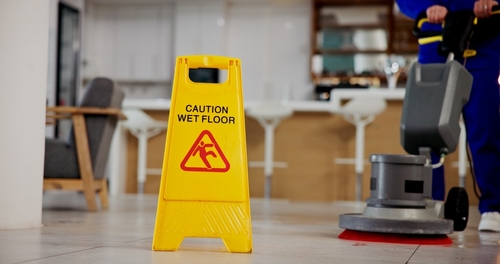
In Philadelphia’s commercial corridors, property owners often believe a yellow “wet floor” sign creates an impenetrable legal shield against slip-and-fall liability. This misconception can lead to devastating financial consequences. While warning signs remain important, Pennsylvania law and federal safety standards require comprehensive slip-prevention strategies beyond temporary signage. Wet floor signs alone rarely provide adequate protection when someone suffers serious injuries on your property.
If you’re a Philadelphia property owner concerned about slip-and-fall liability, The Law Offices of Greg Prosmushkin can help you understand your legal obligations and defend against premises liability claims. Call (609) 656-0909 or contact us now to discuss how we can protect your interests.
Understanding Pennsylvania’s Modified Comparative Negligence Rule
Pennsylvania follows a modified comparative negligence system under 42 Pa. Cons. Stat. § 7102(a), which states that a plaintiff’s contributory negligence “shall not bar a recovery… where such negligence was not greater than the causal negligence of the defendant.” Even with wet floor signs posted, you can still be held primarily liable if other safety measures fall short. Damages are diminished in proportion to the plaintiff’s negligence, creating complex calculations beyond warning signage.
For Philadelphia property owners, this creates critical vulnerability. A jury might find that while a wet floor sign was present, the property owner bears 60% or more of the fault due to inadequate lighting, improper floor materials, or delayed cleanup procedures. Under Section 7102, when a defendant is liable for 60% or more of total liability, they become jointly and severally liable for the entire judgment. This can expose property owners to paying full damages, not just their proportional share.
💡 Pro Tip: Document all safety measures implemented on your property, not just signage placement. Photographs of floor treatments, maintenance logs, and employee training records can demonstrate comprehensive precautions beyond warning signs, potentially reducing your percentage of fault in liability assessments.
Federal OSHA Standards Demand More Than Warning Signs
The Occupational Safety and Health Administration sets expectations extending beyond signage. Under 29 CFR 1910.22(a)(2), the floor of each workroom must be maintained in a clean and, to the extent feasible, dry condition. While OSHA regulation 29 CFR 1910.145 establishes specifications for accident prevention signs including caution signs, it does not contain a specific requirement to provide warning signs for wet floor areas. However, OSHA can cite employers under the General Duty Clause and 1910.22 for failing to properly address wet floor hazards.
OSHA’s hospital eTool recommendations emphasize operational controls, including:
- Ensuring spills are reported and cleaned immediately
- Implementing non-slip surface treatments
- Requiring appropriate waterproof footwear in wet areas
- Maintaining clear aisles and walkways
- Installing proper drainage systems
Relying solely on wet floor signs may not satisfy OSHA’s recommended controls, potentially exposing Philadelphia property owners to regulatory violations and increased civil liability. When slip-and-fall injuries occur, plaintiff attorneys scrutinize whether you met these comprehensive federal standards.
The Science Behind Slip Resistance and Property Owner Obligations
Modern slip-and-fall litigation increasingly relies on scientific measurements of floor traction. The National Floor Safety Institute (NFSI) has established slip-resistance thresholds classifying surfaces by wet static coefficient of friction (SCOF). Under the B101.1 standard, surfaces must achieve a wet SCOF of ≥0.60 to be considered slip-resistant.
These numeric thresholds provide measurable, industry-recognized benchmarks for product evaluation by Philadelphia property owners. Testing uses an NFSI-approved tribometer, producing objective measurements. For property owners, claiming you had a wet floor sign becomes less relevant if your flooring material fails to meet recognized safety standards.
Real Economic Impact: Why Prevention Beats Warning Signs
Research published in occupational medicine journals reveals the staggering economic burdens of slip-and-fall injuries. Liberty Mutual data estimated the direct costs of disabling workplace injuries from same-level falls at $9.19 billion nationally in 2012. Slips, trips, and falls on the same level accounted for 17.4% of reported non-fatal occupational accidents in 2013, resulting in a median of 10 work days lost.
For Philadelphia property owners, these statistics translate to substantial financial exposure: litigation costs, potential judgments, workers’ compensation claims, lost productivity, increased insurance premiums, and reputational damage. The research underscores the need for better fall prevention strategies using systems approaches, indicating that single interventions like wet-floor signs are insufficient.
💡 Pro Tip: Consider implementing a slip-resistance testing program for your property. Regular testing with approved tribometers provides documented evidence of proactive safety efforts and identifies problem areas before accidents occur. This data becomes invaluable evidence if you face a slip and fall lawsuit.
Philadelphia Property Owners Must Consider Product Certification Status
When selecting floor treatments, mats, or cleaning products, Philadelphia property owners should verify manufacturer claims. NFSI-certified products are maintained on a registry on the NFSI website. However, the specific recertification period and associated costs are not publicly disclosed in available sources.
For Philadelphia premises liability contexts, evidence about certification dates and active status becomes relevant to evaluating ongoing slip risk. NFSI-certified products are listed on the NFSI website, creating verifiable sources that property owners and litigators can consult. Relying on products with lapsed certifications or unverified slip-resistance claims can undermine your defense, regardless of warning signs posted.
When Multiple Defendants Share Liability
In complex Philadelphia slip-and-fall cases, multiple parties may share responsibility: property owner, maintenance contractor, cleaning service, or product manufacturer. Pennsylvania’s liability allocation rules under Section 7102 make these cases particularly nuanced. While liability is several by default, the 60% threshold rule can dramatically shift the financial burden.
Consider a scenario where a slip occurs in a Philadelphia office building lobby. The property owner might argue that the cleaning contractor failed to use appropriate products. However, if the property owner selected non-certified floor treatments, failed to verify contractor procedures, or ignored previous incidents, they could be assigned the majority of the fault. Once that 60% threshold is crossed, the property owner becomes responsible for collecting from other defendants or bearing the entire judgment alone.
Building a Comprehensive Slip Prevention Strategy
Scientific literature and legal precedents make clear that Philadelphia property owners need integrated prevention strategies beyond signage. A comprehensive approach should address:
Surface Management:
- Regular coefficient of friction testing
- Use of NFSI-certified floor treatments
- Proper drainage and moisture control systems
- Selection of appropriate flooring materials for each area
Operational Procedures:
- Immediate spill response protocols
- Regular inspection schedules
- Clear documentation of all safety measures
- Employee training on hazard identification
Environmental Controls:
- Adequate lighting in all areas
- Proper entrance matting systems
- Climate control to prevent condensation
- Clear marking of elevation changes
💡 Pro Tip: Create a slip-and-fall prevention committee including representatives from maintenance, security, and management. Regular meetings to review incident reports and prevention strategies demonstrate systematic approaches courts recognize as meeting duty of care beyond warning signs.
Common Misconceptions That Increase Liability
Philadelphia property owners often hold beliefs that increase liability exposure:
“The sign was clearly visible” – Visibility alone doesn’t absolve liability if other safety measures were inadequate. Courts examine the totality of circumstances, including hazard duration and available precautions.
“We clean the floors every night” – Cleaning frequency matters less than effectiveness. Using products that leave residue or reduce traction can increase liability, even with frequent cleaning.
“It’s an old building with original floors” – Age doesn’t excuse non-compliance with current safety standards. Property owners must retrofit or treat surfaces to meet modern slip-resistance requirements.
“The person was wearing inappropriate shoes” – While footwear can affect comparative negligence calculations, it rarely eliminates owner liability, especially in areas open to the public where various footwear is expected.
How Philadelphia’s Unique Conditions Affect Slip-and-Fall Risk
Philadelphia’s climate and urban environment create specific challenges. Variable weather patterns mean entrance areas face constantly changing moisture conditions. Historic buildings in Center City often feature marble or terrazzo floors that become extremely slippery when wet. High foot traffic along Broad Street accelerates wear on floor surfaces and safety treatments.
Property owners must also consider Philadelphia’s aging population and numerous medical facilities. Areas near hospitals and senior centers require heightened slip prevention attention, as these populations face greater injury risk and longer recovery times.
Legal Strategies When Signs Aren’t Enough
When facing slip-and-fall claims despite posted wet floor signs, Philadelphia property owners need sophisticated defenses. Your legal team should investigate:
- Whether the plaintiff ignored clearly marked alternative routes
- Specific coefficient of friction measurements for the accident location
- Comparative analysis of your safety measures against industry standards
- Documentation of all prevention efforts beyond signage
- The plaintiff’s actions immediately before the fall
- Previous incidents in the same location and remedial measures taken
Understanding these factors helps build defenses that acknowledge the limited protection of warning signs while demonstrating comprehensive safety efforts. Philadelphia slip and fall attorneys recognize that juries often sympathize with injured plaintiffs, making thorough preparation essential.
Frequently Asked Questions
Can wet floor signs completely protect me from liability in Pennsylvania?
No, wet floor signs alone cannot completely protect property owners from liability. While signs demonstrate some effort to warn of hazards, courts examine the totality of safety measures. Property owners must maintain floors in a reasonably safe condition, implement proper cleaning procedures, ensure adequate lighting, and address structural hazards. Pennsylvania’s comparative negligence rules mean that even with warning signs, you can still be found primarily at fault if other safety measures were inadequate.
What happens if I’m found more than 60% at fault for a slip-and-fall accident?
Under Pennsylvania law, if you’re found 60% or more at fault, you become jointly and severally liable for the entire judgment amount. Instead of paying just your proportional share, you could be responsible for 100% of damages, even if other parties share fault. You would then need to seek contributions from other liable parties separately. This makes comprehensive prevention strategies crucial.
How often should I test my floors for slip resistance in Philadelphia?
Industry best practices suggest testing high-traffic areas quarterly and all floors at least annually. Testing should also occur after changes to flooring, cleaning products, or surface treatments. Areas with frequent moisture exposure, such as entrances and restrooms, may require more frequent testing. Document all testing results and remedial actions taken.
What makes a wet floor sign legally adequate in Pennsylvania?
A legally adequate wet floor sign must be clearly visible, use universally understood symbols or text, and be placed to give reasonable warning before someone encounters the hazard. Signs should be positioned at all approach angles to the wet area and use contrasting colors. However, adequacy also depends on lighting conditions, hazardous area size, and whether alternative routes were available. Multiple signs may be necessary for larger areas.
Do I need to maintain records of floor cleaning and safety measures?
Yes, maintaining detailed records is crucial for liability protection. Document cleaning schedules, products used, employee training, incident reports, inspection logs, and remedial actions taken. Include dates, times, and employee signatures. These records demonstrate systematic approaches to safety beyond posting signs. Courts often view absent documentation as evidence of negligent maintenance practices.
Protecting Your Philadelphia Property Beyond Warning Signs
Slip-and-fall liability in Philadelphia demands that property owners move beyond the false security of wet floor signs. With potential joint and several liability when fault reaches 60%, economic impacts measured in billions, and increasingly sophisticated scientific standards, a comprehensive approach becomes essential. Property owners must meet federal OSHA requirements, implement industry-standard slip-resistance measures, and maintain systematic safety protocols.
Wet floor signs represent just one component of adequate safety programs. By implementing integrated prevention strategies, maintaining proper documentation, and staying current with safety certifications, Philadelphia property owners can build meaningful protection against liability. The investment in comprehensive safety measures pays dividends in reduced legal exposure and genuinely safer environments for employees, customers, and visitors.
If you’re facing a slip-and-fall claim or want to evaluate your property’s liability exposure, The Law Offices of Greg Prosmushkin has the experience to guide you through Pennsylvania’s complex premises liability laws. We help property owners understand their obligations and build strong defenses when accidents occur. Call (609) 656-0909 today or contact us online to schedule a consultation and protect your property interests.