






A car accident in Trenton can leave you shaken and unsure of what to do next. The evidence you collect following a crash can make or break your ability to recover compensation for vehicle damage, medical bills, and lost wages. Knowing how to gather evidence after an auto accident in Trenton, New Jersey, gives you the strongest foundation for any insurance claim or legal action. This guide walks you through the key steps, legal requirements, and practical strategies for documenting your Trenton car accident.
If you need guidance right now, The Law Offices of Greg Prosmushkin can help. Call (609) 656-0909 or reach out online to discuss your situation today.
Why Accident Scene Evidence in Trenton Matters So Much
The evidence you preserve at the scene directly affects how fault is determined and how much compensation you may recover. New Jersey follows a modified comparative negligence system under N.J.S.A. 2A:15-5.1 et seq., which assigns a percentage of fault to each party. Under N.J.S.A. 2A:15-5.1, you cannot recover damages if your negligence exceeds that of the other party. If you are 50% or less at fault, your damages are reduced by your percentage of fault. Without solid proof, an insurance company may assign you higher fault, reducing or eliminating your payout.
Insurance companies investigate accidents and assign liability based on contributing factors such as failing to observe other vehicles, driver inattention, and failure to apply brakes or swerve. Without strong documentation, you face an uphill battle against an insurer with its own version of events.
💡 Pro Tip: Start collecting evidence at the scene if physically able. Even phone photos can preserve details that disappear within hours, such as skid marks, debris patterns, and traffic signal positions.
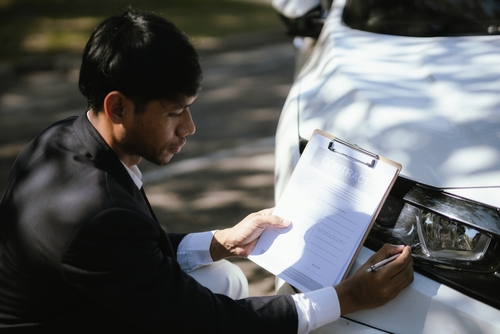
What New Jersey Law Requires You to Do at the Scene
New Jersey statutes impose specific obligations on every driver involved in a collision. Under N.J.S.A. 39:4-129(a), a driver knowingly involved in an accident resulting in injury or death must immediately stop and remain at the scene until fulfilling the requirements of subsection (c). Under N.J.S.A. 39:4-129(c), that driver must also provide their name and address and exhibit their operator’s license and registration certificate to the person injured or whose property was damaged, any police officer, and any witness of the accident.
These obligations extend to property-damage-only crashes. Under N.J.S.A. 39:4-129(b), a driver involved in damage to an attended vehicle must immediately stop and provide name, address, license, and registration information. The other driver is legally required to share identifying details that serve as critical evidence for your claim.
Penalties That Reinforce Your Right to Information
Violations of N.J.S.A. 39:4-129 carry serious consequences. For accidents involving injury or death, fines range from $2,500 to $5,000, with up to 180 days imprisonment when the accident resulted in death or injury to someone other than the convicted driver. A first offense also results in a one-year license suspension. If a driver flees, note any details about the vehicle, including color, make, model, and partial plate numbers.
💡 Pro Tip: Write down the other driver’s information yourself rather than relying solely on a photo. Glare or low light can make photos unreadable later.
Step-by-Step Guide to Gathering Evidence After a Trenton Car Crash
Taking a systematic approach ensures you do not overlook critical evidence. Below is a breakdown of the NJ car crash documentation you should collect.
Photograph and Video Everything
Use your phone to capture wide-angle and close-up photos of all vehicles, the roadway, traffic signs, signals, and any visible injuries. Record a short video panning the entire scene if possible. Include weather conditions, lighting, and road surface quality. These visual records help establish proximate cause in negligence determinations.
Collect Witness Information
Witnesses provide independent accounts supporting your version of events. Ask bystanders, nearby business employees, or other motorists if they saw what happened. Record their names, phone numbers, and a brief summary of observations. Witness statements become powerful evidence when an insurer questions fault.
Obtain the Police Report
A police report creates an official record and often includes the officer’s preliminary fault assessment. Under N.J.S.A. 39:4-130, drivers involved in accidents causing injury, death, or property damage exceeding $500 must file a written report within 10 days and notify local police immediately. However, a written report is not required from the driver if a law enforcement officer submits a report pursuant to R.S. 39:4-131. Request a copy as soon as it becomes available.
💡 Pro Tip: When speaking with police, stick to facts. Avoid speculating about fault or saying you feel “fine.” Adrenaline can mask injuries that appear hours or days later.
How a Car Accident Lawyer in Trenton Can Strengthen Your Evidence
An experienced car accident lawyer in Trenton can identify evidence you may not have considered and preserve it before it disappears. Surveillance footage from nearby businesses, electronic data from vehicle event recorders, and cell phone records require prompt action to secure.
Legal counsel can also help you understand how New Jersey’s modified comparative negligence framework applies to your specific facts. The NJ Department of Banking and Insurance outlines key terms used in fault determinations, including proximate cause, greater duty of care, last clear chance, and evasive action. Each concept connects to the evidence that will matter most in your case.
Understanding Your Insurance Claim Options in New Jersey
After a car accident in NJ, you have two paths for filing a claim. You can file a “first party” claim with your own insurer or a “third party” claim with the other driver’s insurer. Each option has different considerations affecting what evidence you need.
First Party vs. Third Party Claims
| Feature | First Party Claim | Third Party Claim |
|---|---|---|
| Filed with | Your own insurance company | The other driver’s insurer |
| Coverage type | Collision or comprehensive | Liability coverage |
| Fault requirement | Generally not required | Must show the other driver was at fault |
| Payout limit | Your policy limits | Other driver’s policy limits |
For third-party claims, the other driver’s insurer will only pay damages to the extent their insured was legally responsible. Your evidence must clearly demonstrate the other driver’s fault. Collision coverage covers damage from collisions with other vehicles, fixed objects, or roadway objects, plus vehicle upset, regardless of who caused the crash. Comprehensive coverage handles theft, vandalism, animal contact, falling objects, glass breakage, fire, wind, hail, and flood.
💡 Pro Tip: Even if you file a first party claim, gather evidence of the other driver’s fault. Your insurer may pursue subrogation, and strong evidence improves recovery likelihood.
Deadlines You Cannot Afford to Miss
Time limits play a decisive role in car accident cases. The statute of limitations for personal injury actions, including car accidents, is generally two years under N.J.S.A. 2A:14-2 et seq. Missing this deadline can permanently bar your right to file a lawsuit.
Various factors may alter standard limitation periods, so verify the deadlines for your specific situation. Courts interpret exceptions narrowly, and tolling or discovery rules do not automatically apply. Consulting with a Trenton accident attorney early ensures you do not lose your right to pursue compensation.
Reporting Deadlines Under N.J.S.A. 39:4-130
Beyond lawsuit statutes of limitations, New Jersey imposes separate accident reporting obligations. Drivers must file a written report within 10 days for accidents involving injury, death, or property damage over $500. Knowingly violating this requirement carries a $30 to $100 fine, and the chief administrator may revoke or suspend driving privileges. Unawareness of injury or damage extent is not a valid defense if the driver knew they were involved in an accident.
Building a Strong Evidence File for Your Trenton Auto Accident Case
Organizing your evidence into a single, accessible file improves both your insurance claim and any potential lawsuit. Keep copies of:
- Police report and any supplemental reports
- Photos and videos from the accident scene
- Witness names, contact information, and statements
- Medical records and bills documenting injuries and treatment
- Repair estimates and invoices for vehicle damage
- Pay stubs or employment records showing lost wages
- Correspondence with insurance companies
Each piece of evidence connects to a specific element of negligence you may need to prove in a Trenton personal injury case. Duty, breach, causation, and damages all require factual support, and gaps in documentation give insurers room to dispute your claim.
💡 Pro Tip: Create a dedicated folder on your phone or computer for all accident-related documents. Back it up to cloud storage so you do not lose anything if your device is damaged.
Frequently Asked Questions
1. What should I photograph at the scene of a Trenton car accident?
Capture images of all vehicles from multiple angles, the roadway, traffic signals and signs, debris, skid marks, weather and lighting conditions, and visible injuries. More detail strengthens your evidence when evaluating fault.
2. How long do I have to file a car accident lawsuit in New Jersey?
The statute of limitations for personal injury actions in New Jersey is generally two years. However, various factors may alter this period, so confirm the specific deadline for your circumstances.
3. Do I have to report a minor fender bender in Trenton?
If the accident involves injury, death, or property damage exceeding $500, New Jersey law requires you to notify local police immediately and file a written report within 10 days. Even minor accidents benefit from official records.
4. Can I file a claim with both my insurance and the other driver’s insurance?
You generally can file a first party claim with your own insurer or a third party claim with the other driver’s insurer. The best approach depends on your accident facts, fault determinations, and available coverage. A car accident lawyer can help evaluate your options.
5. What if the other driver refuses to share their information at the scene?
New Jersey law requires drivers to provide their name, address, license, and registration after an accident. Refusing carries significant penalties. If the other driver will not cooperate, call police immediately and document whatever details you can observe about the driver and vehicle.
Take Action to Protect Your Trenton Car Accident Claim
Gathering strong evidence after a car accident in Trenton is one of the most important steps to protect your right to fair compensation. From photographing the scene and collecting witness information to understanding reporting obligations and insurance options, every detail matters. New Jersey’s modified comparative negligence system means evidence quality directly influences fault assignment and recovery amounts.
The Law Offices of Greg Prosmushkin is ready to help you navigate the process. Call (609) 656-0909 or contact us today to discuss your Trenton auto accident case and learn how we can protect your rights.