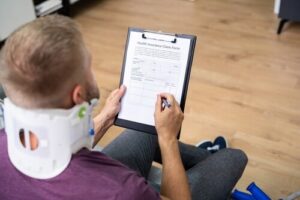






Pursuing Full Damages as a Pedestrian After a Philadelphia Car Crash
If you were hit by a car while walking in Philadelphia, you may be entitled to recover the full range of damages available under Pennsylvania law. Unlike drivers and passengers, pedestrians generally are not bound by the "limited tort" restrictions that can limit recovery for many auto accident claimants. This means you can typically pursue both economic and non-economic damages, including pain and suffering. However, Pennsylvania’s comparative negligence rules, insurance minimums, and statutory frameworks all shape what you can actually recover.
If you were injured as a pedestrian in a Philadelphia car crash, The Law Offices of Greg Prosmushkin can help you understand your legal options. Call (609) 656-0909 or reach out online to discuss your case today.

Why Pedestrians in Pennsylvania Often Escape Limited Tort Restrictions
Pennsylvania uses a tort option system that affects many motor vehicle accident claims, but pedestrians frequently fall outside its reach. When Pennsylvania drivers purchase auto insurance, they choose between "full tort" and "limited tort" coverage. Limited tort policyholders may seek recovery for medical bills and expenses but generally cannot recover non-economic damages like pain and suffering unless their injuries meet the "serious injury" threshold, defined under 75 Pa.C.S. § 1702 as death, serious impairment of body function, or permanent serious disfigurement.
How Pedestrians Differ From Vehicle Occupants
Pedestrians are not policyholders exercising a tort election when they step into a crosswalk. Because a pedestrian is not an occupant of an insured vehicle at the time of the crash, the limited tort provisions of 75 Pa.C.S. § 1705 do not apply. The Pennsylvania Supreme Court confirmed this in L.S. v. Eschbach, 874 A.2d 1150 (Pa. 2005), holding that Section 1705 is silent with regard to pedestrians and applies only to motor vehicle drivers and passengers, not pedestrians. Since pedestrians are not vehicle occupants, they are treated as full tort claimants and may pursue pain and suffering damages without clearing the serious injury threshold.
💡 Pro Tip: Even if you have limited tort on your own auto insurance policy, that election generally does not prevent you from pursuing non-economic damages when you are injured as a pedestrian. Your tort selection typically applies only when you are an occupant of your insured vehicle.
Proving Negligence: The Foundation of a Philadelphia Pedestrian Crash Claim
To recover damages after being hit by a car in Philadelphia, you must establish that the driver was negligent. This requires proving four elements: the driver owed you a duty of care, breached that duty, the breach caused your injuries, and you suffered actual damages. Your attorney must prove causation through medical records, police reports, witness statements, and other evidence.
Negligence Per Se in Pedestrian Cases
When a driver violates a provision of the Pennsylvania Motor Vehicle Code, that violation may constitute negligence per se. This legal doctrine means the violation itself establishes the breach-of-duty element. However, the violation must be the proximate cause of your damages. For example, if a driver ran a red light and struck you in a crosswalk, the traffic violation could establish negligence per se, but you still need to connect that violation directly to your injuries.
💡 Pro Tip: Obtain a copy of the police report as soon as possible after your accident. If the responding officer cited the driver for a traffic violation, that citation can serve as powerful evidence supporting a negligence per se argument in your case.
How Comparative Negligence Can Reduce a Car Accident Lawyer in Philadelphia Recovery
Pennsylvania follows a modified comparative negligence rule that can reduce or even eliminate your recovery. Under 42 Pa.C.S.A. § 7102(a), a plaintiff may only recover damages if found to be less than 51% at fault for the accident. Any damages recovered are reduced by the plaintiff’s percentage of fault. So if a jury awards you $200,000 but finds you were 20% responsible, your recovery drops to $160,000.
This rule frequently arises in pedestrian cases where the defense argues the pedestrian was jaywalking, distracted by a phone, or crossing against a signal. An experienced car accident lawyer in Philadelphia can help you build a strong case to minimize any fault attributed to you.
| Plaintiff Fault Percentage | Effect on Recovery |
|---|---|
| 0% | Full damages awarded |
| 1%, 50% | Damages reduced by plaintiff’s fault percentage |
| 51% or more | No recovery permitted |
💡 Pro Tip: Preserve any evidence that shows you had the right of way, such as crosswalk signal timing, traffic camera footage, or dashcam recordings from nearby vehicles. This evidence can be critical in defeating comparative negligence arguments.
The Fair Share Act and Multi-Party Pedestrian Accidents
When more than one party may be at fault for a pedestrian crash, Pennsylvania’s Fair Share Act (42 Pa.C.S. § 7102) determines how liability is divided. Before this law took effect on June 28, 2011, Pennsylvania followed a joint and several liability rule where a defendant could be required to pay 100% of a verdict even if only minimally liable. The Fair Share Act changed this so defendants found less than 60% at fault generally pay only their proportional share of damages.
What This Means for Injured Pedestrians
For pedestrians injured in multi-vehicle crashes, this law directly affects recovery from each defendant. Each defendant generally pays only its assigned percentage unless that defendant is 60% or more at fault. When one defendant is 60% or more responsible, that defendant may be held jointly and severally liable for the full amount. Recent Pennsylvania Superior Court decisions have questioned whether the Fair Share Act applies when the plaintiff bears no comparative fault, which may preserve joint and several liability in some pedestrian cases.
Filing a Claim Against a Government Vehicle in Philadelphia
If a government-owned vehicle or government employee caused your pedestrian injuries, additional rules apply. Under Pennsylvania law, you can recover damages when the at-fault driver was a government employee acting in official capacity. However, different damages caps apply depending on the type of government entity. Claims against the Commonwealth (state agencies and employees) fall under the Sovereign Immunity Act (42 Pa.C.S. § 8528), which caps damages at $250,000 per plaintiff and $1,000,000 in the aggregate. Claims against political subdivisions such as the City of Philadelphia fall under the Political Subdivision Tort Claims Act (42 Pa.C.S. §§ 8541-8564), which imposes a cap of $500,000 in the aggregate per occurrence. Claims against SEPTA, however, are governed by the Sovereign Immunity Act because SEPTA is treated as a Commonwealth agency, and thus are subject to the $250,000 per-plaintiff and $1,000,000 aggregate caps.
The Six-Month Notice Requirement
Before filing a lawsuit against a Pennsylvania government entity, you must provide written notice within six months of the injury under 42 Pa. Cons. Stat. § 5522(a). Failure to provide timely notice may bar you from filing a lawsuit. This deadline is significantly shorter than the standard two-year statute of limitations.
💡 Pro Tip: If you suspect a government vehicle was involved in your accident, document the vehicle’s markings, license plate, and any agency identification immediately. The six-month notice window is strict, and courts generally interpret this requirement narrowly.
Critical Deadlines and Steps to Protect Your Philadelphia Pedestrian Crash Claim
Pennsylvania’s statute of limitations gives you two years from the date of injury to file a car accident lawsuit, per 42 Pa.C.S. § 5524(2). While two years may seem like ample time, building a strong pedestrian injury case requires early action. Evidence disappears, witnesses forget details, and surveillance footage gets overwritten.
Why Prompt Medical Treatment Matters
Seeking medical attention immediately after a pedestrian crash is critical to protect both your health and your legal claim. If you delay seeing a doctor, insurance adjusters may argue that something other than the crash caused your injuries. Prompt treatment creates a medical record linking your injuries directly to the accident, which is essential for proving causation. Learn more about how delayed treatment affects your claim.
Understanding Insurance Minimums
Pennsylvania law requires all registered motor vehicles to carry minimum liability insurance of $15,000 for one person’s injury or death, $30,000 for multiple injuries or deaths, and $5,000 for property damage. In serious pedestrian injury cases, these amounts may be insufficient. Additional sources of recovery, such as underinsured motorist coverage on your own policy, may be available.
💡 Pro Tip: Review your own auto insurance policy for underinsured motorist (UIM) coverage. If the at-fault driver carries only minimum coverage, your UIM policy may provide additional compensation for your pedestrian injuries.
Frequently Asked Questions
1. Can a pedestrian sue for pain and suffering after a Philadelphia car accident?
Yes, in most cases. Pedestrians are generally not subject to Pennsylvania’s limited tort restrictions because they are not vehicle occupants exercising a tort election. This means pedestrians may typically pursue non-economic damages, including pain and suffering, without meeting the serious injury threshold. You can learn more about pedestrian pain and suffering claims.
2. How long do I have to file a pedestrian accident lawsuit in Philadelphia?
Under 42 Pa.C.S. § 5524(2), you generally have two years from the date of injury to file a lawsuit. However, if a government entity is involved, you must provide written notice within six months under 42 Pa. Cons. Stat. § 5522(a). Missing either deadline may prevent you from pursuing your claim.
3. What happens if I was partially at fault for the accident as a pedestrian?
Under Pennsylvania’s modified comparative negligence rule (42 Pa.C.S.A. § 7102(a)), you can still recover damages as long as you were less than 51% at fault. Your total recovery will be reduced by your percentage of responsibility. If you are found 51% or more at fault, you cannot recover any damages.
4. Are there damage caps on pedestrian injury claims in Pennsylvania?
Generally, no caps apply to claims against private drivers or their insurers. However, claims against Commonwealth entities under the Sovereign Immunity Act are capped at $250,000 per plaintiff and $1,000,000 in the aggregate, and claims against political subdivisions under the Political Subdivision Tort Claims Act are subject to a cap of $500,000 in the aggregate per occurrence. Note that SEPTA is treated as a Commonwealth agency and is therefore governed by the Sovereign Immunity Act’s $250,000/$1,000,000 caps.
5. What should I do immediately after being hit by a car in Philadelphia?
Call 911, seek medical attention, and document everything you can. Take photos of the scene, get the driver’s information and insurance details, collect witness contact information, and request a copy of the police report. Avoid giving recorded statements to the driver’s insurance company before consulting an attorney.
Protecting Your Rights After a Philadelphia Pedestrian Accident
Being struck by a vehicle as a pedestrian can result in devastating injuries, mounting medical bills, and significant time away from work. Pennsylvania law generally allows pedestrians to pursue the full range of damages, including pain and suffering, without the limited tort restrictions that apply to many vehicle occupants. However, recovering fair compensation requires understanding comparative negligence rules, filing deadlines, insurance coverage limits, and the additional requirements that apply to government vehicle claims.
If you or a loved one was injured as a pedestrian in a Philadelphia car crash, The Law Offices of Greg Prosmushkin is ready to help. Call (609) 656-0909 or contact us today to schedule a consultation and learn how we can fight for the compensation you deserve.