







The Alarming Reality of Commercial Truck Accidents in New Jersey
Every day on New Jersey highways, passenger vehicles share the road with massive commercial trucks weighing up to 80,000 pounds. When these giants collide with smaller vehicles, the consequences can be devastating. Recent data shows that in 2023, there were 5,472 people killed in traffic crashes involving large trucks nationwide—representing an 8.3% decrease from 2022. While this improvement demonstrates progress in commercial vehicle safety, the danger remains significant for New Jersey motorists. Understanding the most common causes of these accidents isn’t just interesting information—it could save your life on Trenton’s busy roadways. If you regularly drive near commercial vehicles, knowing these risk factors and how to protect yourself is essential for your safety and legal rights.
Don’t let the complexities of a commercial truck accident overwhelm you. Reach out to The Law Offices of Greg Prosmushkin for a guiding hand through the legal maze. Whether it’s understanding your rights or securing the compensation you deserve, we’re here to help. Call us at (609) 656-0909 or contact us today to take the first step toward justice.
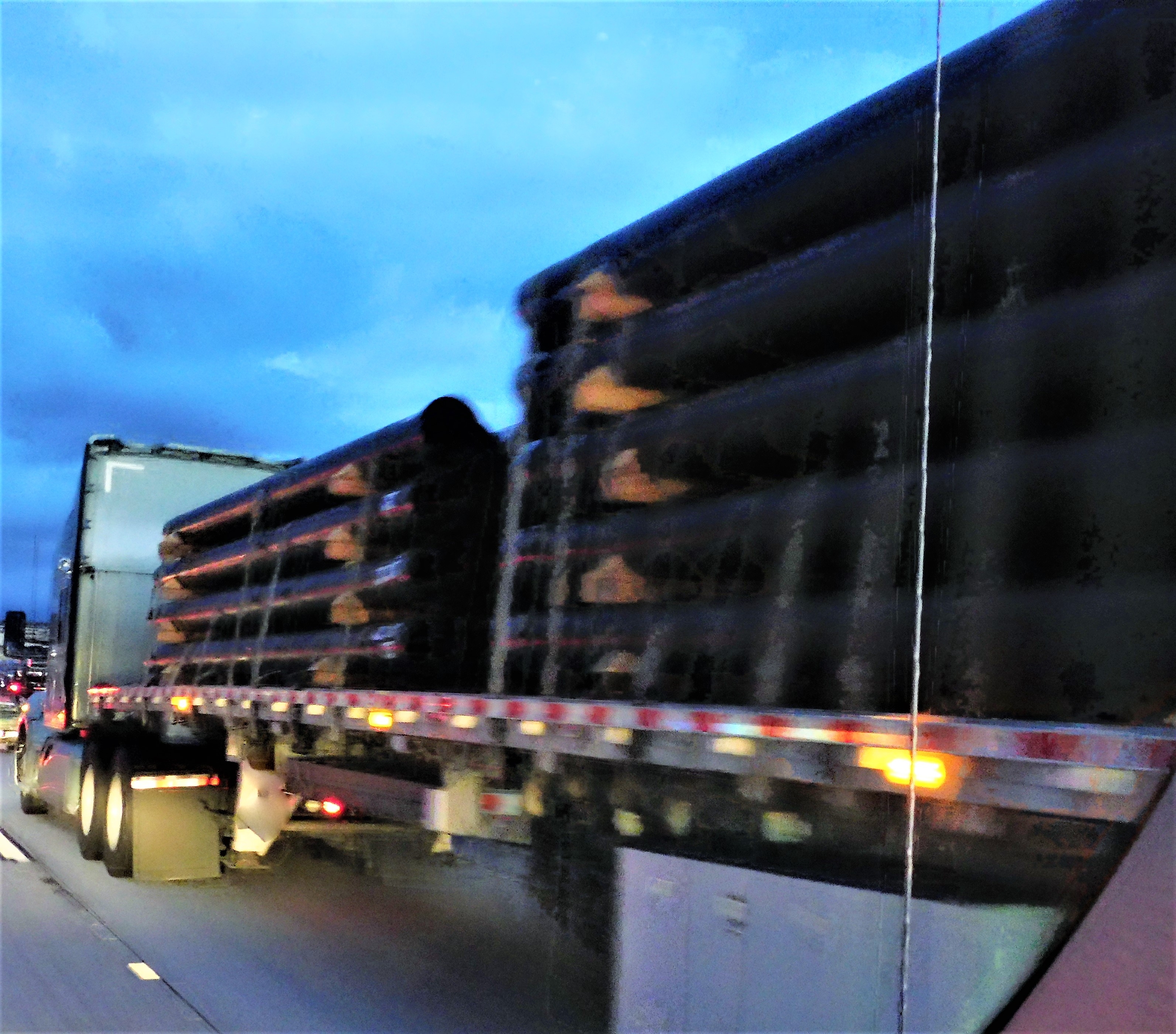
Understanding Your Legal Rights After a Commercial Truck Collision
When you’re involved in a crash with a commercial truck in New Jersey, you have specific legal rights that differ from those in ordinary car accidents. New Jersey operates under a modified comparative negligence system, meaning you can recover damages even if you were partially at fault, as long as your responsibility doesn’t exceed 50%. What many victims don’t realize is that commercial truck accidents often involve multiple liable parties—not just the driver, but potentially the trucking company, vehicle manufacturers, maintenance providers, or cargo loaders. This complex liability landscape is why truck accident claims typically result in higher compensation than standard auto accidents. In 2023, there were 153,452 injuries in crashes involving large trucks nationwide, showcasing the scale of this issue. If you’ve been injured, New Jersey law entitles you to seek compensation for medical expenses, lost wages, property damage, pain and suffering, and in some cases, punitive damages when extreme negligence is involved. Understanding these rights is the first step toward protecting yourself after a commercial vehicle crash in Trenton.
The 5 Most Common Causes of Commercial Truck Accidents
Commercial truck accidents don’t just happen randomly—they typically result from specific, identifiable causes. Understanding these common factors can help you stay vigilant on the road and potentially avoid becoming part of the troubling statistics. According to recent data, transportation incidents accounted for 71.7% of fatalities according to the Federal Highway Administration’s (FHWA’s) Highway Statistics in the transportation and warehousing sector, with roadway collisions being particularly deadly. These accidents follow patterns that every driver should recognize.
-
Driver Fatigue and Hours-of-Service Violations: Despite federal regulations limiting driving hours, fatigue remains a leading cause of truck accidents. Many drivers feel pressured to meet tight delivery deadlines, leading them to exceed legal driving limits. Fatigue-related accidents commonly occur between 12 AM and 6 AM when the body’s circadian rhythm naturally craves sleep. A truck driver who has been awake for 18 hours experiences impairment equivalent to having a blood alcohol concentration of 0.08%—legally drunk in New Jersey.
-
Distracted Driving: Cell phone use, GPS programming, eating, and paperwork completion while driving are common distractions for truck drivers. In multi-vehicle truck crashes, which accounted for 365 fatalities in 2023, distraction often plays a significant role. The Federal Motor Carrier Safety Administration (FMCSA) found that looking away from the road for just 5 seconds while traveling at 55 mph means a truck travels the length of a football field essentially blindfolded.
-
Improper Loading and Cargo Securement: When cargo shifts during transport, it can cause jackknifing, rollovers, or spilled loads. The physics of commercial trucks makes them particularly vulnerable to weight distribution issues. In 2023, single-vehicle truck crashes resulted in 596 fatalities nationwide, with improper loading being a significant contributing factor.
-
Inadequate Maintenance and Equipment Failure: Brake failures, tire blowouts, and steering malfunctions can lead to catastrophic accidents. Commercial trucks log thousands of miles weekly, requiring rigorous maintenance schedules that are sometimes neglected. The FMCSA’s roadside inspections regularly find trucks operating with critical safety violations that should have taken them off the road.
-
Speeding and Aggressive Driving: Large trucks require 20-40% more stopping distance than passenger vehicles. When speeding or driving aggressively, this stopping distance increases dramatically. Data shows that roadway collisions with another vehicle accounted for 249 fatalities in the transportation sector in 2023, with speed often being a critical factor.
How a Trenton Commercial Truck Lawyer Can Help Protect Your Rights
After a commercial truck accident, victims often find themselves facing an uphill battle against powerful trucking companies and their insurers. These companies mobilize teams of investigators and attorneys immediately after an accident to minimize their liability. To level the playing field, working with a knowledgeable New Jersey truck accident attorney is crucial. At The Law Offices of Greg Prosmushkin, we understand the complex federal and state regulations governing commercial vehicles, including hours-of-service requirements, maintenance standards, and driver qualification regulations. We conduct thorough investigations to identify all liable parties and secure critical evidence like electronic logging device (ELD) data, maintenance records, and driver qualification files before they can be altered or destroyed. In 2023, the injury rate in general freight trucking was 2.9 cases per 100 full-time equivalent workers—each case representing a person who needed proper legal representation. Our firm has successfully represented numerous victims of commercial vehicle crashes in Trenton, securing compensation that fully accounts for both immediate injuries and long-term consequences. Rather than accepting an insurance company’s initial lowball offer, we fight to ensure you receive fair compensation for all the damages you’ve suffered.
The Unique Dangers of Commercial Truck Accidents vs. Passenger Vehicle Collisions
Commercial truck accidents present distinct dangers and challenges compared to collisions involving only passenger vehicles. Understanding these differences is essential for anyone who shares the road with these massive vehicles. The physics of truck accidents alone creates drastically different outcomes—in 2023, of the 5,472 people killed in large truck crashes, only 961 were truck occupants while 4,511 were occupants of other vehicles or nonoccupants. This stark disparity highlights the uneven risk distribution in these accidents. Commercial trucks can weigh up to 80,000 pounds when fully loaded, compared to the average passenger vehicle weighing around 4,000 pounds. This weight disparity, combined with the higher ground clearance of trucks, creates severe underride hazards where smaller vehicles can become trapped beneath the truck. Additionally, commercial trucks carry significant insurance coverage—often $750,000 to $1,000,000 or more—compared to New Jersey’s minimum passenger vehicle coverage of $25,000 per person for bodily injury. This higher coverage reflects the greater damage potential and makes these cases particularly contentious as insurance companies fight aggressively to minimize payouts.
Understanding Blind Spots and “No-Zones”
One of the most dangerous aspects of sharing the road with commercial trucks is their extensive blind spots, often called “no-zones.” These areas—extending up to 20 feet in front, 30 feet behind, one lane to the right (extending diagonally backward), and two lanes to the left of the truck—create scenarios where passenger vehicles become completely invisible to truck drivers. We’ve seen numerous cases where drivers maintained what they thought was a safe distance from a truck, only to find themselves in a dangerous situation when the truck changed lanes without seeing them. These blind spot accidents often result in sideswipe collisions or can force vehicles off the road entirely, especially on Trenton’s busier highways like I-295 and I-195.
Gathering Critical Evidence After a Commercial Truck Accident
The aftermath of a commercial truck accident presents a brief but crucial window for collecting evidence that can make or break your case. Unlike ordinary car accidents, commercial truck crashes involve specialized evidence that can disappear quickly without prompt legal intervention. Truck companies often dispatch rapid response teams to accident scenes to protect their interests—you need someone doing the same for you. Electronic logging devices (ELDs), which replaced paper logbooks in most trucks, record crucial data about driving hours, speeds, and rest periods. This information can reveal hours-of-service violations but may only be preserved for a short time. Similarly, the truck’s “black box” (Electronic Control Module or ECM) records critical pre-crash data such as speed, braking patterns, and throttle position—evidence that can disappear unless legally preserved through prompt action. In 2023, large-truck occupants injured in multi-vehicle crashes increased by 16%, highlighting the importance of thorough evidence collection in these complex cases.
The Importance of Swift Action and Preservation Letters
Time is truly of the essence after a commercial truck accident. Crucial evidence can be legally destroyed, altered, or lost if not properly preserved. For example, trucking companies are only required to maintain certain records for six months under federal regulations. A skilled Trenton trucking lawsuit attorney will immediately send spoliation letters (legal notices demanding preservation of evidence) to all potentially responsible parties. These letters prevent the destruction of vital evidence like driver qualification files, maintenance records, dispatcher notes, and delivery schedules. Physical evidence from the accident scene—including skid marks, vehicle debris, and roadway gouges—can provide crucial insights into how the accident occurred but will disappear with time and weather. Witness memories also fade quickly, making prompt interviews essential. The 24-48 hours following a truck accident are often the most critical period for evidence collection, which is why contacting an attorney should be among your first actions after receiving medical care.
Understanding New Jersey’s Comparative Negligence in Truck Accident Cases
New Jersey follows a modified comparative negligence rule that directly impacts how compensation is determined in commercial truck accident cases. Under this system, you can recover damages even if you were partially at fault for the accident, as long as your share of fault doesn’t exceed 50%. However, your compensation will be reduced by your percentage of fault. For example, if you’re awarded $100,000 in damages but found to be 20% at fault, you’ll receive $80,000. This becomes particularly important in commercial truck accident cases, where defense attorneys routinely attempt to shift blame to the injured party. In 2023, nonoccupant injuries in large truck crashes increased by 15%, and many of these cases involved complex liability questions that required careful navigation of comparative negligence principles. Understanding this legal framework is essential for maximizing your recovery in a New Jersey truck accident claim.
Navigating Insurance Tactics and Settlement Offers
After a commercial truck accident, insurance adjusters typically contact victims quickly, often while they’re still recovering in the hospital. These early communications aren’t coincidental—they’re strategic attempts to secure statements that can be used against you later or to obtain quick, low-cost settlements before you understand the full extent of your injuries. Commercial trucking companies carry substantial insurance policies, sometimes with multiple layers of coverage from different insurers. This complex insurance landscape means negotiations require deep knowledge and experience. Trucking companies and their insurers have significant financial incentives to minimize payouts, especially considering that in 2023, there were 153,452 injuries in crashes involving large trucks nationwide. Initial settlement offers rarely account for long-term medical needs, future lost earnings, or diminished quality of life. A knowledgeable NJ commercial vehicle accident attorney will properly value your claim, accounting for all current and future damages, and negotiate from a position of strength—or take your case to trial if a fair settlement can’t be reached.
Frequently Asked Questions
1. How soon after a commercial truck accident in Trenton should I contact a lawyer?
You should contact a Trenton commercial truck lawyer as soon as possible after an accident—ideally within the first 24-48 hours. This immediate action is crucial because commercial trucking companies dispatch rapid response teams to accident scenes to gather evidence and build their defense. Additionally, critical electronic evidence like black box data and logbook information can be legally altered or destroyed if not promptly preserved through legal means. Physical evidence at the scene disappears quickly, and witness memories fade. While New Jersey allows two years to file a lawsuit under the statute of limitations, waiting even a few days can significantly weaken your case and reduce your potential compensation.
2. What compensation can I recover in a New Jersey truck accident claim?
In a New Jersey truck accident claim, you may be entitled to various forms of compensation, including medical expenses (both current and future), lost wages and diminished earning capacity, property damage, pain and suffering, emotional distress, and loss of enjoyment of life. In cases involving extreme negligence, punitive damages may also be available. Unlike regular car accidents, commercial truck crashes often involve higher compensation amounts due to more severe injuries and multiple liable parties. With 4,511 non-truck occupants killed in large truck crashes in 2023 nationwide, these accidents frequently result in catastrophic injuries requiring lifetime care. A trusted New Jersey truck accident claims attorney can properly value all aspects of your claim, including often-overlooked damages like future medical care, home modifications, and long-term assistance needs.
3. Who can be held liable in a commercial vehicle crash in Trenton?
Multiple parties may be liable in a commercial vehicle crash in Trenton, making these cases more complex than typical auto accidents. Potentially liable parties include: the truck driver (for negligent driving), the trucking company (under vicarious liability or for negligent hiring/training), the truck manufacturer or parts manufacturer (for defective components), maintenance providers (for negligent repairs), cargo loading companies (for improper loading), and third-party contractors. In some cases, government entities may bear liability for poorly designed or maintained roadways. The transportation sector saw 667 fatalities from transportation incidents in 2023, with many involving multiple liable parties. Identifying all responsible parties is crucial for maximizing your recovery, as each may have separate insurance policies or assets that can contribute to your compensation.
4. How do trucking regulations affect my accident case in New Jersey?
Federal and state trucking regulations significantly strengthen your case when violations contributed to your accident. The Federal Motor Carrier Safety Administration (FMCSA) enforces strict rules regarding hours of service, driver qualification, vehicle maintenance, cargo securement, and drug/alcohol testing. When these regulations are violated, it creates a powerful negligence argument in your favor. For example, if a driver exceeded the maximum 11-hour driving limit and crashed, this violation provides strong evidence of negligence. Similarly, maintenance violations that led to equipment failures (like the 193 fatalities from roadway collisions with objects in 2023) create clear liability. New Jersey also has state-specific regulations that may apply. A knowledgeable Trenton trucking lawsuit attorney will investigate all possible regulatory violations, obtain compliance records, and use these violations to establish liability in your case.
5. What if I was partially at fault for my commercial truck accident in Trenton?
If you were partially at fault for your commercial truck accident in Trenton, you can still recover damages under New Jersey’s modified comparative negligence law—as long as you were not more than 50% responsible. Your compensation will be reduced by your percentage of fault. For example, if you’re awarded $200,000 but found 30% responsible, you’ll receive $140,000. Trucking companies and their insurers often try to shift blame to injured parties to reduce their liability, especially in multi-vehicle truck crashes (which saw a 16% increase in injuries in 2023). Common allegations include claims that you were speeding, distracted, or in the truck’s blind spot. A commercial vehicle crash Trenton attorney will counter these arguments with evidence like accident reconstruction, witness testimony, and expert analysis to minimize your assigned percentage of fault and maximize your recovery.
Work with a Commercial Auto Accidents lawyer
When you’re facing the aftermath of a commercial truck accident, having knowledgeable legal representation can make a tremendous difference in your recovery—both physical and financial. The Law Offices of Greg Prosmushkin has extensive experience handling complex truck accident cases throughout New Jersey, with a deep understanding of both federal trucking regulations and state-specific laws. Our approach begins with a thorough investigation to preserve critical evidence before it disappears, identify all liable parties, and build a compelling case for maximum compensation. We work with accident reconstruction specialists, medical experts, and financial analysts to document the full impact of your injuries. While most cases settle out of court, we prepare each case as if it will go to trial, giving us leverage during negotiations with insurance companies. This preparation is especially important considering that in 2023, there were 5,472 fatalities and over 153,000 injuries in large truck crashes nationwide—each representing a person who deserved fair compensation. If you or a loved one has been injured in a commercial truck accident, contact us for a free consultation to discuss your legal options and the best path forward for your specific situation.
When the road gets rough, and you’re caught in the aftermath of a commercial truck accident, don’t navigate the legal twists and turns alone. The Law Offices of Greg Prosmushkin is ready to steer you toward the justice and compensation you deserve. Give us a call at (609) 656-0909 or contact us today to start your journey toward resolution.